

The Most Scenic Secondary Roads in Italy

When people imagine traveling through Italy, they often picture famous destinations: Rome, Venice, Florence, the Amalfi Coast.
But some of the most memorable parts of Italy are not the places themselves.
They are the roads between them.
Not the highways. Not the fastest routes suggested by navigation apps. But the slower roads — the ones that pass through vineyards, mountains, forgotten villages, coastal cliffs, and landscapes that seem designed to make you stop the car every few minutes.
In Italy, secondary roads are not just a way to move.
Sometimes, they are the real destination.

Why Secondary Roads Change the Experience
Highways help you arrive.
Secondary roads help you understand where you are.
They reveal an Italy that many travelers never see: old stone villages, local cafés with no English menus, abandoned monasteries, agricultural landscapes, roadside shrines, quiet valleys, and panoramic viewpoints that never appear in travel guides.
Traveling this way also changes your rhythm.
You stop rushing. You notice more. Distances become part of the experience instead of something to minimize.
And slowly, the trip starts feeling less like tourism and more like exploration.
1. Tuscany’s Rolling Roads: Beyond the Famous Postcards
Tuscany is known worldwide, but many travelers experience it only through its main cities.
The real magic often begins when you leave the direct routes behind.
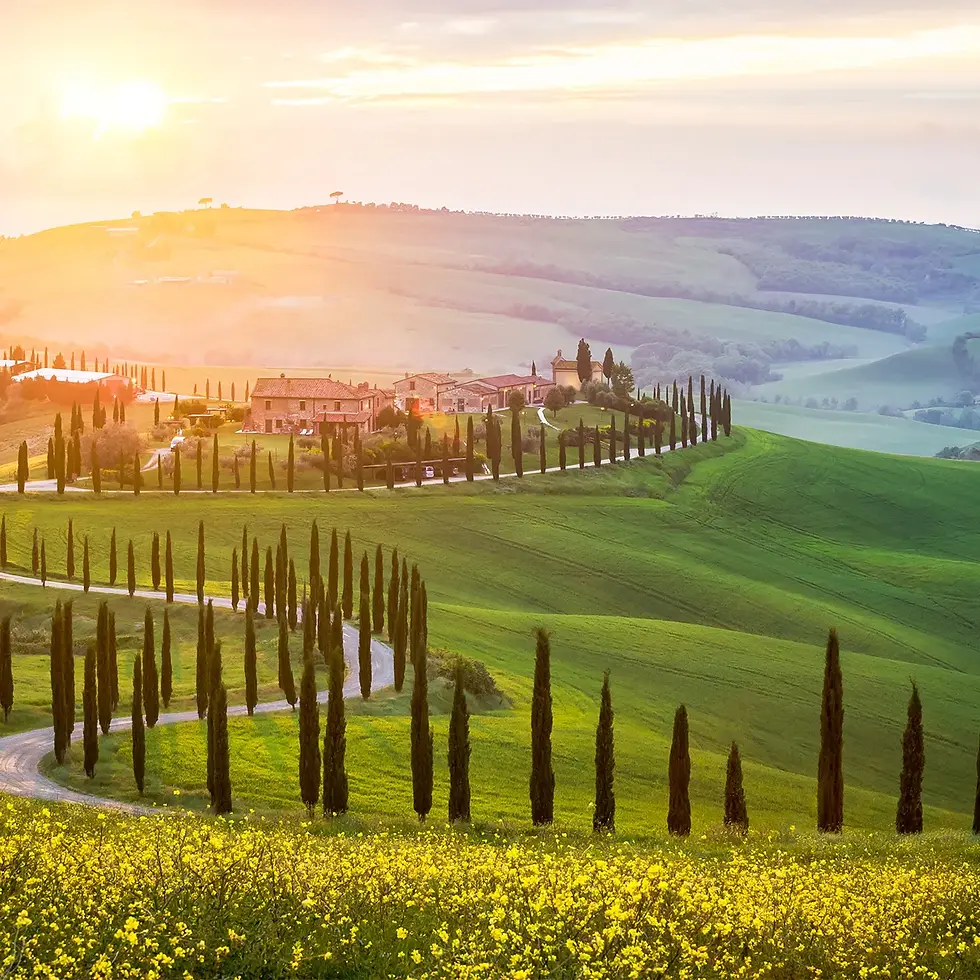
Some of the most scenic secondary roads in Italy pass through Val d’Orcia, the Crete Senesi, and the countryside between small villages like Pienza, Montalcino, Montefollonico, or San Quirico d’Orcia.
Here, the landscape moves slowly:cypress trees, wheat fields, vineyards, isolated farmhouses, soft hills that change color depending on the season and the light.
There is no need to rush.
In fact, these roads almost force you not to.
2. The Old Coastal Roads of Liguria and Amalfi
Italy’s coastlines become completely different when experienced away from highways.
In Liguria, the small roads connecting villages between cliffs and the sea offer continuous views over harbors, terraces, and colorful houses suspended above the Mediterranean.
Further south, the Amalfi Coast is famous for its beauty, but also for traffic.
The best experience often comes early in the morning or during quieter seasons, when the road becomes less stressful and more contemplative.
Windows open. Sea air inside the car. Small viewpoints appearing unexpectedly between curves.
This is not efficient travel.
And that’s exactly the point.
3. Mountain Roads Through the Alps and the Dolomites
Northern Italy offers some of Europe’s most spectacular mountain roads.
Not only the famous passes, but also the smaller roads crossing forests, valleys, alpine lakes, and remote villages.
Driving through the Dolomites or the Italian Alps feels different from central Italy:the landscapes become sharper, more vertical, more dramatic.
Secondary roads here reward patience.
You may drive slowly behind cyclists, stop for cows crossing the road, or find yourself in tiny mountain villages where time seems almost suspended.
And often, the most beautiful moments happen between destinations:a sudden fog opening over a valley, a wooden church appearing in the distance, sunlight moving across the mountains.
4. The Forgotten Roads of Southern Italy
Southern Italy is full of roads that feel almost outside modern travel rhythms.
In regions like Basilicata, Calabria, inland Sicily, or parts of Puglia, secondary roads cross landscapes that still feel deeply connected to local life.
You pass olive groves, quiet towns, old men sitting outside cafés, abandoned stations, and roads where traffic almost disappears.
These are not always “perfect” roads.
Sometimes they are narrow, imperfect, slower.
But they often create the strongest memories because they feel real, unfiltered, and alive.
How to Enjoy Italy’s Scenic Roads Properly
The secret is simple: stop trying to optimize everything.
Avoid building itineraries that are too ambitious.
Leave space for improvisation.
Accept detours.
Stop when something catches your attention, even if it was not part of the plan.
Some practical tips:
Avoid driving long scenic roads in the middle of the day during summer
Choose one region instead of crossing the whole country
Use highways only when necessary
Keep time margins flexible
Travel slower than you think you should
Because in Italy, some places are beautiful.
But some roads actually change the way you experience travel itself.
The Real Beauty of Traveling Through Italy
Italy is not only a country of destinations.
It is a country of transitions:between mountains and sea, villages and cities, silence and movement, history and everyday life.
And secondary roads allow you to experience those transitions fully.
Sometimes, the memory you keep from Italy will not be a monument or a museum.
It will be a road at sunset, somewhere between two places you had never heard about before.


Comments